A new product, an awkward interface or a circuit that needs another look. QED brings hands-on electronic design and embedded software experience to the work in front of you.
We can help you turn a requirement into schematics, a PCB and firmware, then work through the practical business of getting it built, powered up and tested.
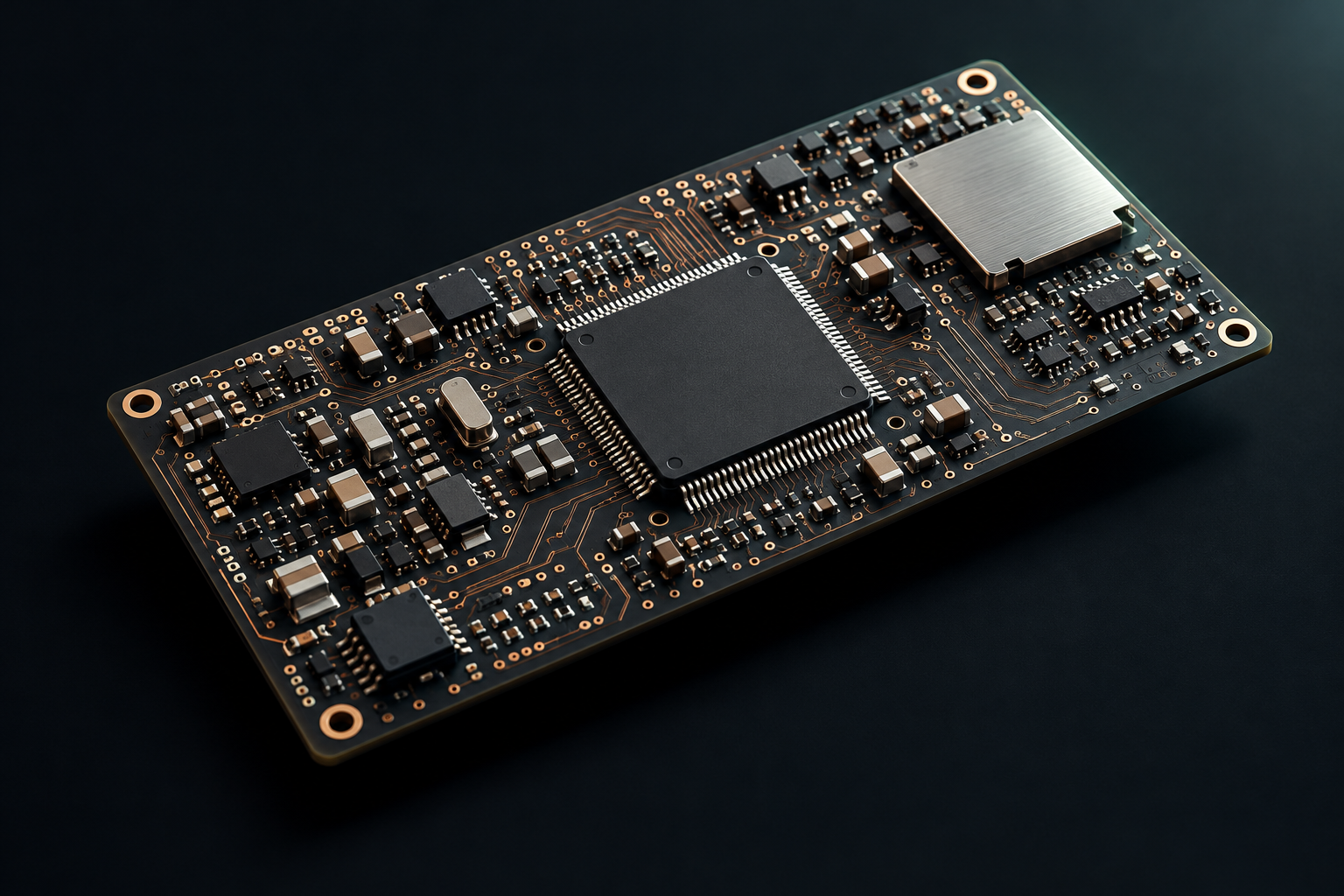
From circuit to complete systemConcept illustration
Designed around the application
The small details shape the whole design.
Power, noise, timing, connectors and the space inside an enclosure all have a say in how a product works. Thinking about them early helps keep the electronics grounded in the way they’ll actually be used.
You may need a complete design, help with one part of a product, or an independent review before moving forward. We’ll agree where QED can be most useful.
Circuit design and PCB development
Analogue and digital circuitry, schematic capture, PCB layout, power supplies and sensor interfaces. We consider the electrical requirements alongside the mechanical layout, communications and test access, so the board has a clear place in the wider product.
Firmware that understands the hardware
Microcontrollers bring the circuit to life through control, measurements and communications. QED develops embedded firmware with the hardware in view, and can work with ARM/Linux-based systems when an application needs more processing or a richer software environment.
Wireless and cellular integration
Choosing a communications module is only the beginning. Power consumption, coverage, data handling and how the equipment recovers from an interrupted connection all need attention. We can help connect the electronics to useful software and services.
Prototype assembly, bring-up and testing
We can coordinate prototype manufacture with suitable suppliers and support assembly, initial power-up and investigation. The goal is to turn the design into something measurable, understand its behaviour and work through the changes needed for the next revision.
A fresh look at an existing design
If a product is unreliable, difficult to maintain or ready for an update, a focused review can help. We can investigate faults, examine the interaction between hardware and firmware, and discuss practical improvements without assuming everything needs to be replaced.
A useful handover
A prototype should leave you with answers.
We’ll agree what success looks like before testing begins, and make sure the findings are useful to the people taking the project forward.
Know what you’re testing
Operating conditions, interfaces and the measurements that matter should be clear. This gives the prototype a purpose and helps distinguish a promising result from something that needs more investigation.
Understand the results
Measured behaviour informs the next revision. We’ll discuss the findings, practical limitations and design trade-offs so you can make an informed decision about further development.
Keep the design usable
Design files, firmware, test notes and manufacturing information are agreed as part of the scope. That way, you know what will be available for handover, future changes and support.
Your next engineering challenge
Something on your mind? Let’s work it through.
You don’t need a finished specification to start a conversation. Tell us what you’re hoping to achieve, what you’ve tried and where you could use a hand. We’ll talk through whether QED is the right fit and what a sensible next step might look like.
Our public pages work without cookies. We use no advertising or analytics cookies.
Accept essential lets us remember this choice for 90 days. A separate session cookie supports IoT sign-in and secure forms when you use them.
What won’t work with no cookies?
IoT sign-in, dashboard access and secure online enquiry forms need a session cookie. Choosing No cookies also signs you out of any current IoT session. You can still browse our services and email us.
We won’t save a “no cookies” preference, so this panel may appear again on another page. Animation controls still work on the current page.